Science Illustrations and Animations for Complex Research Communication
Scientific progress depends on more than discovery. New knowledge must be shared, interpreted, and understood by people with different levels of expertise. Researchers need to communicate with colleagues from other disciplines, educators must explain difficult concepts to students, and scientific organizations increasingly need to engage public and professional audiences.
Science illustrations and animations play a central role in this process. They translate abstract ideas, invisible phenomena, complex systems, and large datasets into visual forms that can be understood more efficiently. When developed with scientific accuracy and a clear communication strategy, visual content can make research more accessible without oversimplifying the underlying science.
Making the Invisible Visible
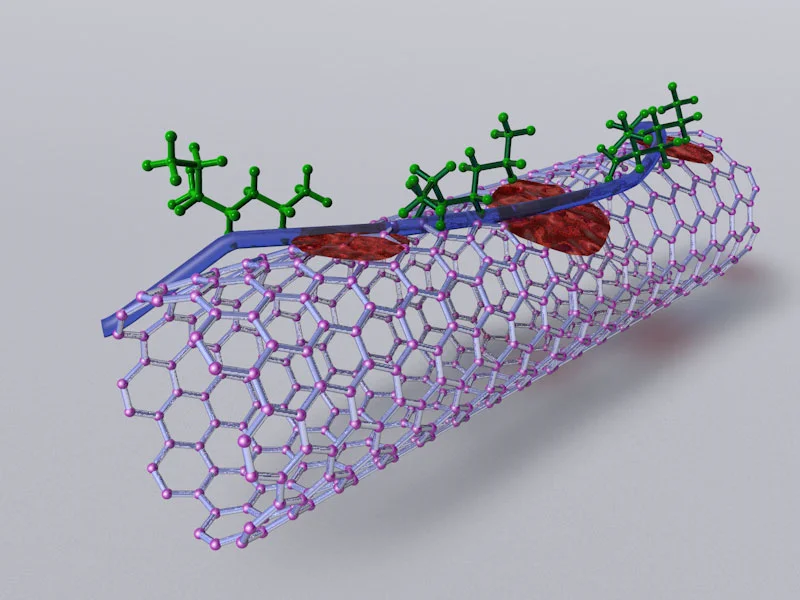
A significant part of scientific research focuses on phenomena that cannot be directly observed by the human eye. Molecules, cells, magnetic fields, geological structures, atmospheric systems, and astronomical events often exist outside the scale of ordinary human perception.
Scientific illustrations https://scientific-illustrations.com make these subjects visible by creating carefully constructed representations based on available evidence, data, models, and expert knowledge. A visual can reveal the internal structure of a cell, show interactions between molecules, reconstruct an extinct organism, or explain processes occurring beneath the Earth’s surface.
The purpose is not necessarily to reproduce reality exactly. Scientific illustration often uses selective simplification to communicate the most important information. Irrelevant details can be removed, while essential structures and relationships can be emphasized through composition, scale, color, transparency, and labeling.
This approach helps audiences focus on the central scientific message instead of becoming overwhelmed by unnecessary visual complexity.
The Importance of Visual Storytelling in Science
Scientific information is often presented through technical language, data tables, and traditional figures. These formats remain essential, but they do not always provide an immediate understanding of the larger concept behind the research.
Visual storytelling organizes information into a logical sequence. A scientific illustration can guide the viewer from a broad overview to a detailed explanation, while a series of visuals can demonstrate relationships between different stages of a process.
This approach is particularly valuable for interdisciplinary communication. Scientists from different fields may use specialized terminology that is unfamiliar to other researchers. A well-designed illustration can provide a shared visual framework and make complex ideas easier to discuss across disciplines.
The same principle applies to communication with non-specialist audiences. Effective science visualization does not remove scientific depth. Instead, it creates a clearer path toward understanding.
Why Animation Adds Another Dimension
While illustrations are highly effective for explaining structure and spatial relationships, animation is particularly useful for processes that involve movement, time, or change.
Scientific animation can demonstrate how systems evolve and interact. It can show chemical reactions, cellular mechanisms, ecological changes, weather patterns, engineering processes, or astronomical events in sequence.
Motion allows viewers to observe cause-and-effect relationships that may be difficult to communicate through separate static images. For example, an animation can demonstrate how a molecular interaction triggers a chain of biological events or how changes in one part of an environmental system influence another.
However, animation https://scientific-illustrations.com/portfolio/animation must be used purposefully. Movement alone does not automatically improve communication. Effective scientific animation requires careful pacing, clear visual hierarchy, and a logical narrative. Too much motion or excessive detail can distract the audience from the main message.
The most successful animations use motion to explain information that genuinely benefits from being shown over time.
Applications in Scientific Research
Science illustrations and animations have become important assets in research communication. They are used in academic publications, conference presentations, grant proposals, institutional reports, and digital platforms.
Graphical abstracts and conceptual illustrations, for example, can summarize the main findings of a study in a single visual format. Complex experimental workflows can be presented as clear diagrams, while animated content can demonstrate dynamic simulations and scientific processes.
Visual communication can also support collaboration during the research process itself. Scientists often use illustrations and models to develop hypotheses, explore data, and identify relationships that may not be immediately apparent in written or numerical formats.
In this sense, visualization is not only a communication tool. It can also support scientific thinking and discovery.
Improving Science Education
Science education frequently requires students to understand concepts across multiple scales. A learner may need to connect the behavior of individual molecules with cellular processes, organ systems, or entire ecosystems.
Scientific illustrations help organize these relationships into understandable visual models. They allow students to examine structures and systems that may be too small, too large, too distant, or too dangerous to observe directly.
Animations add value when students need to understand change over time. Processes such as protein synthesis, planetary motion, climate systems, or fluid dynamics can be difficult to imagine from written descriptions alone.
Interactive technologies are expanding these opportunities even further. Three-dimensional models and simulations allow learners to rotate objects, explore different perspectives, and manipulate variables. This creates a more active learning experience and can strengthen conceptual understanding when the technology is used with a clear educational purpose.
Science Visualization for Public Engagement
Public interest in science depends partly on how effectively scientific knowledge is communicated. Research topics such as climate change, space exploration, biotechnology, energy, and environmental systems can involve complicated evidence that is difficult to explain through text alone.
Science illustrations and animations can make these topics more engaging and understandable. Visualizations help audiences recognize patterns, understand scale, and follow processes that would otherwise remain abstract.
Public-facing content must also be designed responsibly. A visually impressive animation may attract attention, but scientific accuracy remains essential. Effective communication requires a balance between engagement and evidence.
The strongest visual stories are developed with an understanding of both the science and the needs of the intended audience.
New Technologies and Future Opportunities
Advances in digital technology continue to expand the possibilities of science visualization. Three-dimensional modeling, real-time rendering, virtual reality, augmented reality, and interactive simulations are creating new ways to explore scientific information.
Researchers can increasingly transform data into immersive visual environments, allowing users to interact with complex systems in more intuitive ways. Artificial intelligence can also assist with data processing, model generation, and certain stages of visualization production.
Despite these technological advances, professional judgment remains essential. Scientific visuals must be based on reliable information and clearly distinguish between observed data, evidence-based models, and conceptual representations.
Conclusion
Science illustrations and animations are essential tools for communicating complex research in a visually clear and meaningful way. They support education, scientific collaboration, research dissemination, and public engagement by transforming difficult concepts into understandable visual experiences.
As scientific knowledge continues to grow in complexity, the demand for accurate and effective visualization will increase. By combining scientific expertise with strong visual design and purposeful storytelling, science illustrations and animations help ensure that important discoveries can be understood, discussed, and shared across disciplines and audiences.