The Canvas Breach Exposed the Risk of One-Platform Education
In May 2026, a cybersecurity incident affecting Canvas became more than a technical problem. Students and instructors at institutions around the world temporarily lost access to a platform used for lecture videos, course notes, assignments, messages, grades and examinations. The disruption arrived during final-exam season at many universities, when even a short interruption could affect revision schedules, deadlines and assessment arrangements.[1]
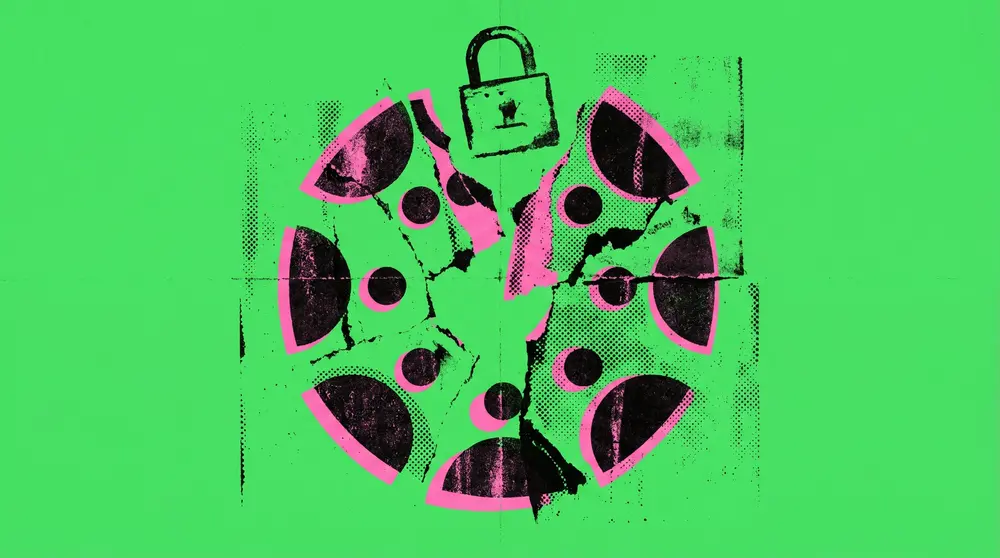
The incident therefore raised two distinct questions. The first concerned privacy: what personal information had been accessed, and what might happen to it? The second concerned educational continuity: why could one vendor incident separate students from so much of the material required to complete their studies?
That second question remains relevant even after services are restored. Universities increasingly treat the learning management system as the default location for almost every part of a course. When access disappears because of a cyberattack, an institutional shutdown, an expired account or graduation, students can discover that years of academic material were never truly under their control.
What Happened to Canvas?
Instructure, the company behind Canvas, said it detected unauthorised activity on April 29, 2026. On May 7, the same threat actor obtained additional access through a second vulnerability connected to the Free-for-Teacher environment and altered pages shown to some logged-in users. Instructure then placed Canvas into maintenance mode while it contained the activity and applied further safeguards.[2]
It is important to describe the outage accurately. Canvas was not globally unavailable for several continuous days. Instructure restored access to most users later on May 7 and reported the platform fully online by May 9. However, some schools and universities continued blocking access for longer while they assessed the risk. At those institutions, the practical interruption lasted from one day to several days.[3]
The academic consequences were immediate. Students could not reach lecture recordings or revision materials. Some institutions postponed examinations and extended deadlines. Faculty had to move communication and assessment arrangements to email or other systems. A platform designed to simplify education had become a single point through which a security decision could interrupt multiple academic functions at once.
What Data Was Exposed?
Instructure stated that the compromised fields included usernames, email addresses, course names, enrolment information and messages exchanged through Canvas. It said there was no evidence that passwords, dates of birth, government identification or financial information had been accessed. The company also said that core learning data, including course content, submissions and credentials, was not compromised.[4]
The ShinyHunters group claimed responsibility and alleged that the incident affected nearly 9,000 institutions and data connected to 275 million individuals. Those figures attracted headlines describing the event as one of the largest education-sector data incidents. However, the scale claimed by the attackers was not independently confirmed at the time and should not be presented as an established fact.[5]
Instructure later announced that it had reached an agreement with the unauthorised actor. The company said the data had been returned and that it had received digital confirmation of destruction. It also acknowledged that complete certainty is impossible when dealing with cybercriminals.[6]
This distinction matters. A company can contain an intrusion, restore service and negotiate the deletion of stolen information, but it cannot reverse the fact that private educational data left the environment it was expected to remain within. Names, institutional email addresses, course affiliations and private messages can still provide useful material for phishing, impersonation and targeted fraud.
The Reputational Damage Goes Beyond Security
The breach damaged Canvas because it challenged two forms of trust simultaneously.
The first was trust in data protection. Students use university systems because participation is often compulsory, not because they have independently evaluated the vendor’s security architecture. When those systems expose personal information, users bear a risk they did not meaningfully choose.
The second was trust in availability. Canvas is not merely a website that supplements teaching. At many institutions it functions as the operational centre of a course. It may hold the only convenient copy of a lecture recording, the current assignment instructions, instructor feedback, revision resources and the channel for contacting teaching staff.
Instructure’s chief executive apologised not only for the incident but also for inconsistent communication during the response. That admission is significant. In a platform-dependency crisis, uncertainty becomes part of the harm. Students need to know whether they can study, submit work and sit examinations. Institutions need to know whether they should restore access or maintain a precautionary block.[7]
The incident therefore exposed concentration risk in digital education. Centralisation creates efficiency, but it also increases the impact of failure. When content, communication, assessment and identity are concentrated in one system, one incident can affect all of them together.
Students Do Not Necessarily Keep Access After Graduation
The outage also highlights a quieter form of dependency. What happens when a student finishes university?
There is no universal Canvas rule guaranteeing permanent access. Instructure’s own guidance states that institutions may restrict access to concluded courses. University policies vary substantially. Some institutions preserve past courses in read-only form. Others remove Canvas access after graduation, after a period of non-enrolment or a fixed number of days. Even where the course shell remains visible, linked recordings, library readings and publisher materials may expire earlier.[8]
This creates a basic contradiction. Students may spend years building knowledge through lectures, feedback, notes and course resources, yet access to that academic history can depend on an active institutional account and a vendor-controlled interface.
Should a student lose access to an entire degree’s learning materials on graduation day? The legal rights to lecture recordings and copyrighted readings do not automatically transfer to the student. Nevertheless, there is a reasonable distinction between unauthorised redistribution and preserving permitted material for personal study.
From Platform Access to Academic Continuity
Taking control of educational content does not mean copying everything indiscriminately. It means reducing unnecessary dependence on a single login.
Students can preserve instructor-approved downloads, their own submissions, feedback, notes, permitted lecture recordings and locally generated study materials. They can organise files by course, maintain backups and convert long videos into searchable text. A transcript is often more resilient than a streaming link because it can be searched, annotated and reviewed without depending on the original player. A summary can support revision, although it should remain a study aid rather than a replacement for the lecture itself.
This is where tools such as Canvas Assistant fit into the broader continuity problem. The service combines lecture saving, transcription and summarisation in a browser-based workflow. Used as a canvas video downloader, it can help students preserve supported recordings for offline personal study. Its guide explains practical ways to download video from Canvas, beginning with instructor-enabled download options and moving to other technical methods where appropriate.
The product’s stated workflow is not entirely server-free. Video detection and saving are designed to occur locally, while AI transcription and summarisation require server processing. That distinction should be clear when discussing privacy. Students should also follow institutional rules, course policies and copyright law, and should not republish or distribute recordings without permission.[9]
Control Should Be Part of Digital Education
The Canvas incident does not prove that learning management systems are inherently unsafe or that universities should abandon central platforms. It demonstrates something narrower and more useful: central platforms should not be the only place where students can reach the material necessary for learning.
Universities need continuity plans, clearer retention policies and alternative channels for examinations, deadlines and urgent communication. Students need a personal preservation strategy for materials they are permitted to keep. Both groups should assume that platform access can fail temporarily and that institutional access can end permanently.
Canvas Assistant addresses one part of that problem by helping students turn accessible lecture recordings into local, searchable and structured study material. The wider lesson is not about one extension or one breach. It is about academic autonomy. Educational technology should help students build durable knowledge, not leave that knowledge dependent on the continued availability of a single account, institution or platform.
Endnotes
[1] Associated Press, “A Canvas Outage Tied to a Cyberattack Has Wreaked Havoc on Colleges’ Final Exam Season,” May 8, 2026.
[2] Instructure, “Security Incident Update & FAQs,” May 2026.
[3] Associated Press, “A Canvas Outage Tied to a Cyberattack Has Wreaked Havoc on Colleges’ Final Exam Season,” May 8, 2026; Instructure, “Security Incident Update & FAQs,” May 2026.
[4] Instructure, “Security Incident Update & FAQs,” May 2026; U.S. Department of Education, “Technology Security Alert: Ongoing Cybersecurity Incident Involving the Canvas Learning Management System,” updated May 29, 2026.
[5] Lawrence Abrams, “Instructure Confirms Data Breach, ShinyHunters Claims Attack,” BleepingComputer, May 3, 2026; Spiceworks, “Canvas LMS Breach: Education’s Largest Data Incident,” 2026.
[6] Associated Press, “Deal Reached with Hackers to Delete Data Stolen from the Canvas Educational Platform,” May 12, 2026.
[7] Instructure, “Security Incident Update & FAQs,” May 2026; EDUCAUSE Review, “How Higher Education Is Responding to the Canvas LMS Incident and Preparing for What’s Next,” May 11, 2026.
[8] Instructure Community, “How Do I View All My Canvas Courses?”; Wilmington University, “Canvas Student Account Access Policy”; University of Pennsylvania, “Canvas After Graduation.”
[9] Canvas Assistant product website, instructional guide and supplied product documentation, 2026.