6 Professional Development Strategies for Teachers in 2026
Most teachers have sat through at least one PD session that felt like a complete waste of time, the kind where someone reads bullet points off a slideshow while you mentally reorganize your classroom library. That experience is exactly why professional development strategies for teachers matter so much. The format, the content, and the follow-through determine whether PD actually changes what happens in a classroom or just eats up a planning period.
Here at The Cautiously Optimistic Teacher, we build resources and tools that help educators work smarter, from AI-powered lesson differentiators to ready-to-use unit plans. We care about professional growth that sticks, not growth that checks a box. That perspective shapes everything we put out, including this article.
Below, you’ll find six strategies that are working right now in 2026, approaches grounded in research but tested in real classrooms. Whether you’re an instructional coach designing PD for your building, an admin rethinking your annual calendar, or a teacher advocating for better training, these strategies give you a concrete starting point. Let’s get into it.
1. Build personalized PD plans with AI support
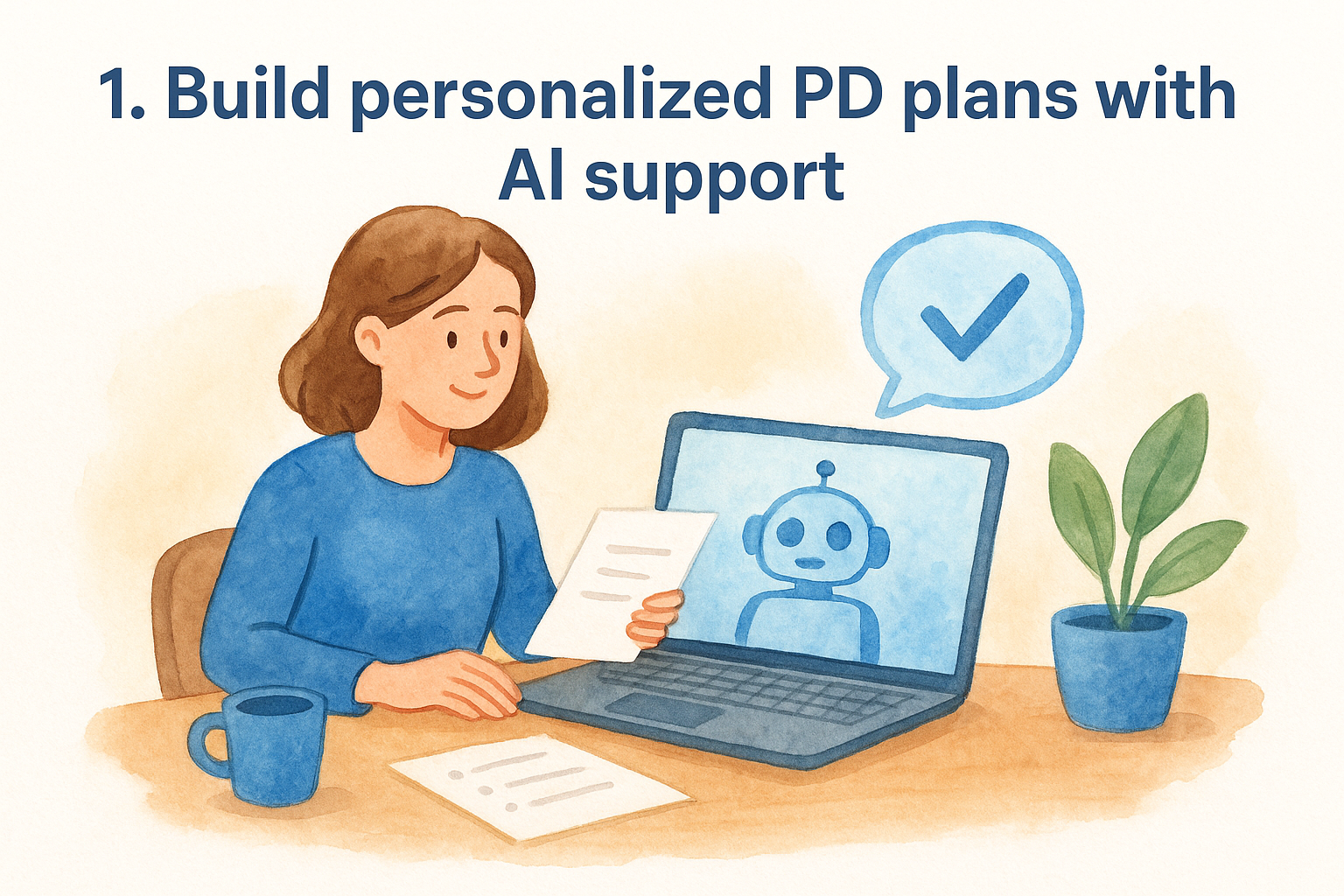
One of the most practical professional development strategies for teachers right now is using AI to build PD plans that actually fit the individual. A one-size-fits-all PD calendar ignores the fact that a first-year teacher and a 15-year veteran have completely different needs, and AI tools can close that gap fast.
Why it works in 2026
AI tools can now analyze teacher input, self-assessment data, and school goals to generate targeted learning paths. Teachers stop wasting time on training they have already mastered and start focusing on specific skill gaps that affect their classrooms directly.
Personalized PD leads to stronger teacher buy-in, which research consistently links to higher implementation rates in the classroom.
How to implement it step by step
Start by having teachers complete a brief self-assessment that covers instructional strengths, areas for growth, and professional goals. Then use an AI tool to map those responses to relevant resources, workshops, and timelines that align with your school year calendar.
What it looks like in real teacher workflows
A middle school English teacher logs into a shared platform each Monday and checks her personalized PD queue for the week. She completes a 20-minute micro-module on differentiated writing feedback, then marks it complete. Her instructional coach reviews progress monthly and adjusts the plan based on new classroom observation data.
Metrics to track for impact
Track these three things consistently to know your plan is working:
- Completion rates for assigned PD modules
- Self-reported confidence scores on targeted skills before and after each module
- Observable changes in classroom practice noted during walkthroughs
Pitfalls and quick fixes
The biggest risk is that teachers treat the AI plan as a checklist rather than a genuine growth tool. Fix this by building in brief reflection prompts after each module. When teachers feel the plan does not match their actual reality, give them direct input to adjust it so the tool stays useful rather than frustrating.
2. Start with student data and teacher goals
Effective professional development strategies for teachers do not start with a training catalog. They start with student performance data and the specific goals teachers are trying to hit in their classrooms. When PD connects directly to what students need, teachers treat it as relevant rather than arbitrary.
Why it works in 2026
When teachers see a direct link between their learning and student outcomes, motivation to engage with PD increases significantly. Data-driven PD keeps the work grounded in real classroom challenges rather than abstract theory.
PD that ties teacher learning directly to student results is more likely to change classroom behavior than generic training.
How to implement it step by step
Pull recent student assessment data and sit with each teacher to identify one or two clear instructional gaps. Then build the PD focus around those gaps rather than a predetermined topic.
What it looks like in real teacher workflows
A math teacher reviews her class unit test results, spots that students struggle with multi-step problems, and works with her coach to find targeted PD on scaffolding complex tasks. The training feels useful because it solves something she already wants to fix.
Metrics to track for impact
Track these two measures consistently:
- Student performance on the specific skill targeted by PD
- Teacher confidence ratings before and after training
Pitfalls and quick fixes
Avoid using only one data point to shape PD decisions. Layer in formative assessment trends and teacher input so the focus stays accurate and teachers feel heard in the process.
3. Run active learning sessions teachers can practice
Passive training does not change classroom behavior. When professional development strategies for teachers shift from sit-and-listen formats to active practice, teachers walk away with skills they can use the next day rather than notes they will never read again.
Why it works in 2026
Teachers learn best by doing, not watching. Active learning formats like role-plays, peer teaching, and live practice rounds force participants to apply new skills immediately, which builds both muscle memory and confidence before they test anything in front of students.
PD that includes deliberate practice produces significantly higher rates of classroom implementation than lecture-based formats.
How to implement it step by step
Design each session around one teachable skill, then give teachers structured time to practice that skill with each other. Build in immediate feedback rounds so participants can adjust before the session ends.
What it looks like in real teacher workflows
A coach runs a 45-minute workshop on questioning strategies. Teachers pair up, one plays the teacher and one plays the student, running a short practice discussion. The coach delivers specific feedback after each round before participants switch roles.
Metrics to track for impact
- Observation data capturing the target skill during classroom walkthroughs
- Teacher self-ratings on skill confidence before and after each session
Pitfalls and quick fixes
Avoid cramming too many skills into one session. When sessions try to cover too much, nothing sticks. Pick one skill, practice it thoroughly, and save the next skill for the following session.
4. Build collaboration into PLCs and team cycles
Isolated professional development rarely sticks. When professional development strategies for teachers include structured collaboration through Professional Learning Communities (PLCs) and team cycles, teachers build on each other’s expertise and hold each other accountable for growth.
Why it works in 2026
Teachers spend most of their day alone in classrooms, which makes structured collaboration one of the most powerful tools for professional growth. Sharing instructional strategies inside a trusted team produces faster, more durable change than solo training.
Teachers who collaborate in structured PLCs implement new strategies at higher rates than those who train alone.
How to implement it step by step
Set a consistent meeting schedule for your PLC, at least twice per month, and assign a clear focus for each cycle based on shared student data. Each meeting should end with a specific action each teacher commits to trying before the next session.
What it looks like in real teacher workflows
A seventh-grade team meets every other Wednesday to review formative assessment results together. Each teacher shares one strategy they tested, and the group decides which approach to refine and carry forward into the next unit.
Metrics to track for impact
Track these two measures to confirm your PLC is producing results:
- Consistency of meeting attendance across the team
- Shared student growth data reviewed each cycle
Pitfalls and quick fixes
Avoid letting PLC time drift into announcements or complaint sessions. Keep a focused agenda visible to the group and assign a rotating facilitator to maintain structure and momentum.
5. Provide job-embedded coaching and peer observation
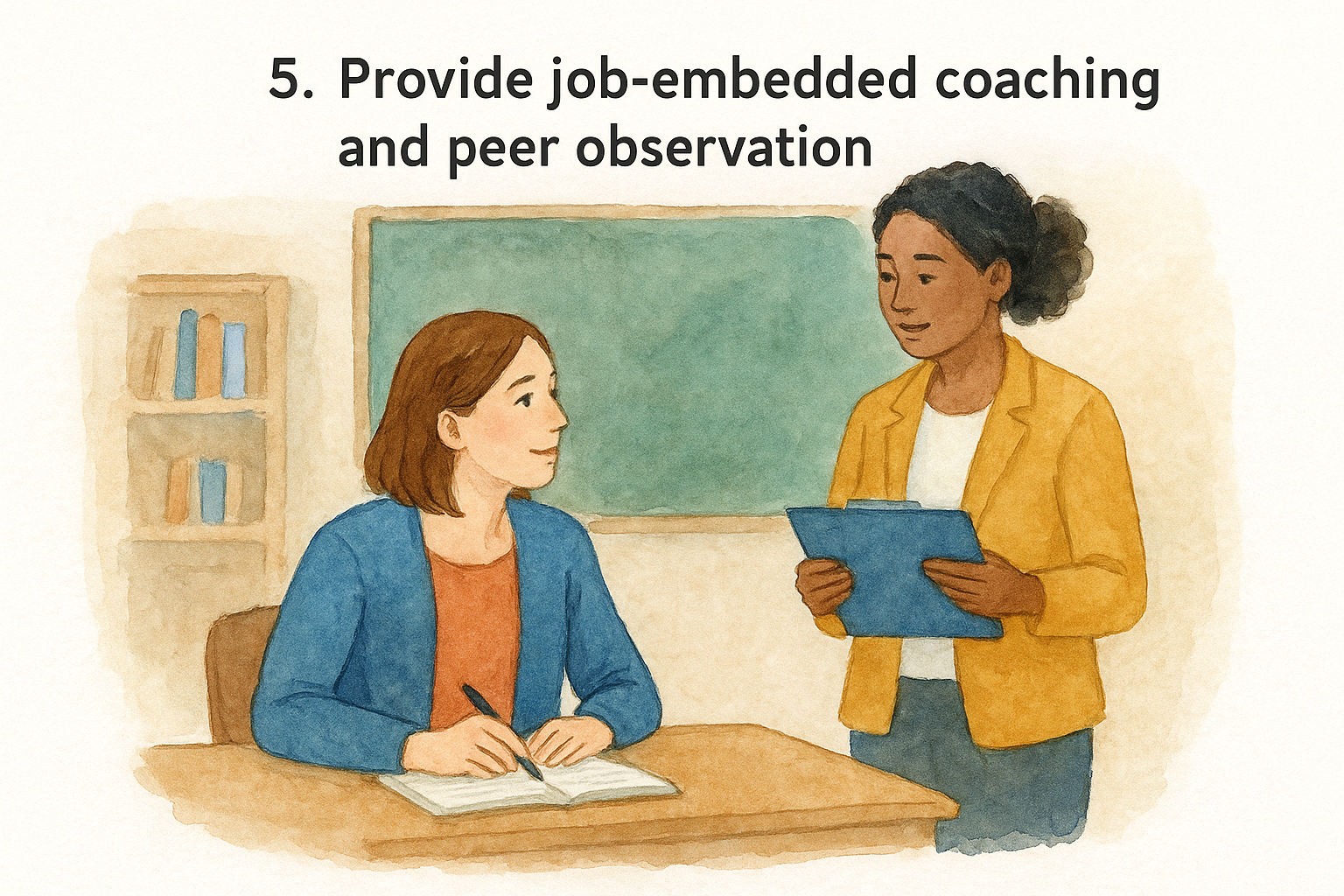
Sitting through a workshop is one thing. Getting direct support inside your classroom, during real instruction, is something else entirely. Among all the professional development strategies for teachers, job-embedded coaching and peer observation produce the most durable growth because feedback arrives in context, not in a conference room.
Why it works in 2026
Teachers improve faster when feedback connects directly to the moment of instruction. Coaching inside the classroom shortens the gap between learning a strategy and actually applying it, which means faster, more confident growth with your specific students.
Coaching tied directly to classroom practice consistently outperforms stand-alone workshop models for long-term skill retention.
How to implement it step by step
Pair each teacher with a dedicated coach or peer observer and schedule short observation cycles of 15 to 20 minutes. Follow every observation with a structured debrief conversation focused on one specific area of growth.
What it looks like in real teacher workflows
A veteran teacher invites a peer to observe her questioning technique during a discussion lesson. Afterward, they spend 10 minutes reviewing specific moments and agreeing on one small adjustment to try the next day.
Metrics to track for impact
- Coaching cycle frequency completed per semester
- Teacher-reported confidence in the observed skill area
Pitfalls and quick fixes
Avoid letting peer observations feel evaluative or high-stakes, or teachers will perform rather than practice. Keep the focus on targeted growth, and let teachers choose the specific skill they want observed so the process stays collaborative and useful.
6. Make PD ongoing with feedback loops and follow-through
Single training sessions rarely change long-term classroom practice. The most effective professional development strategies for teachers treat growth as a continuous cycle, not a one-time event, with regular feedback loops and deliberate follow-through built into the school year.
Why it works in 2026
Teachers retain new skills when they get repeated opportunities to apply, reflect, and adjust over time. Without structured follow-through, even strong training loses its impact within weeks.
PD that includes ongoing feedback loops produces significantly higher rates of long-term skill transfer than isolated workshop models.
How to implement it step by step
Schedule brief monthly check-ins after any major PD session to review progress and surface new questions. Build a simple feedback form teachers complete after each check-in so you can adjust support based on real needs rather than assumptions.
What it looks like in real teacher workflows
A teacher attends a workshop on student feedback strategies in September, then receives monthly coaching prompts with one follow-up resource and a short reflection question. By December, the strategy is part of her regular classroom routine rather than a fading memory.
Metrics to track for impact
- Skill retention rates measured at 30, 60, and 90 days post-training
- Teacher satisfaction scores on follow-through support quality
Pitfalls and quick fixes
Avoid treating follow-through as an optional add-on after training ends. If your schedule does not protect dedicated time for feedback check-ins, the cycle breaks before growth can take hold.
Next steps for your PD plan
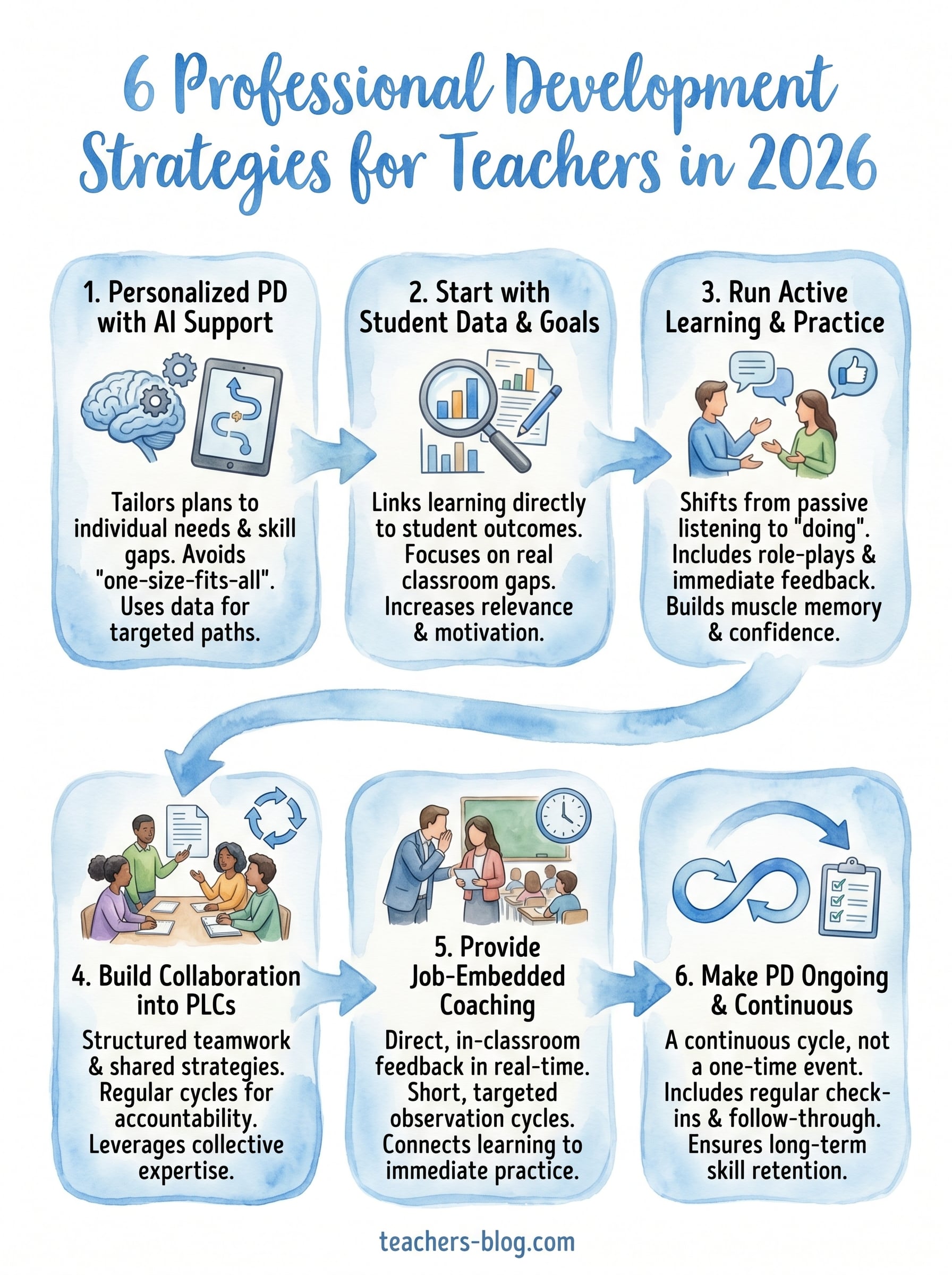
The six professional development strategies for teachers covered here work best when you treat them as a system rather than a menu. Picking one or two in isolation can produce short-term gains, but combining personalized plans, data-driven focus, active practice, collaboration, coaching, and feedback loops creates the kind of sustained growth that actually shifts classroom outcomes.
Your next move is straightforward. Pick the one strategy that addresses your most pressing gap right now and build a 90-day plan around it. Set a clear metric, schedule your check-ins, and get one colleague involved so you have built-in accountability from the start.
When you’re ready to add more tools to your workflow, The Cautiously Optimistic Teacher offers AI-powered resources designed to help you differentiate instruction, generate lesson materials, and save planning time so your energy goes where it matters most, inside the classroom rather than buried in prep work.