
Digital Citizenship In Schools: Definition + 9 Elements
Your students are posting, scrolling, searching, and sharing, often before they fully understand the consequences. That’s exactly why digital citizenship in schools matters. It’s not just another buzzword to add to your curriculum map; it’s a framework for teaching kids how to navigate technology responsibly, ethically, and safely. And whether you’re working with sixth graders who just got their first phone or high schoolers deep into social media, this is a conversation that belongs in your classroom.
But here’s the thing: most teachers agree it’s important, yet many feel unsure about where to start or what to cover. The concept is broader than internet safety alone. It includes everything from digital footprints to media literacy to online empathy, organized into what experts call the nine elements of digital citizenship.
That’s what this article breaks down. You’ll get a clear definition, a walkthrough of all nine elements, and practical strategies you can actually use in your classroom. At The Cautiously Optimistic Teacher, we build resources that help educators teach what matters most, and right now, few things matter more than helping students become thoughtful digital citizens.
Why digital citizenship matters in schools
Students today spend a significant portion of their lives online, and most of them have never received formal instruction on how to behave there. In a typical school week, students research topics on Google, share work through classroom platforms, communicate with peers through apps, and encounter content that ranges from accurate to completely fabricated. Without a framework for making smart decisions, they navigate all of that without any real guidance. That’s exactly where digital citizenship in schools steps in to fill the gap before poor habits become permanent ones.
When students lack digital citizenship skills, the consequences show up in real, measurable ways: cyberbullying incidents, academic dishonesty, privacy violations, and an inability to separate credible sources from misinformation.
Why schools are the right place for this conversation
Not every student has a parent or guardian at home who understands the digital landscape well enough to guide them through it. Schools fill that gap consistently by providing a structured environment where all students, regardless of background, learn these skills side by side. You can set clear expectations, model responsible online behavior, and build assignments that give students real practice applying what they learn.
Your students’ digital footprints start building early and follow them much further than most of them realize. A poorly worded post from middle school can surface during a college admissions review or a job background check years later. Online behavior affects real people, and students who haven’t developed online empathy often don’t stop to consider the human on the other side of the screen. That’s a problem your classroom is uniquely positioned to address, and doing so doesn’t require a separate course or a tech-heavy setup.
What digital citizenship looks like in practice
Digital citizenship in schools doesn’t look like a single lesson about not talking to strangers online. It shows up in everyday classroom moments: a student deciding whether to fact-check a source before citing it, or pausing before forwarding a rumor in a group chat. These small decisions add up, and your job is to build the habits that guide them.
The most effective digital citizenship teaching happens in context, not in isolation.
Examples across grade levels
In a middle school ELA class, you might have students analyze the credibility of a website before using it in an essay. In a high school social studies class, students could debate whether sharing a one-sided news article contributes to misinformation. These conversations build critical thinking that transfers directly to how students interact with information outside your classroom.
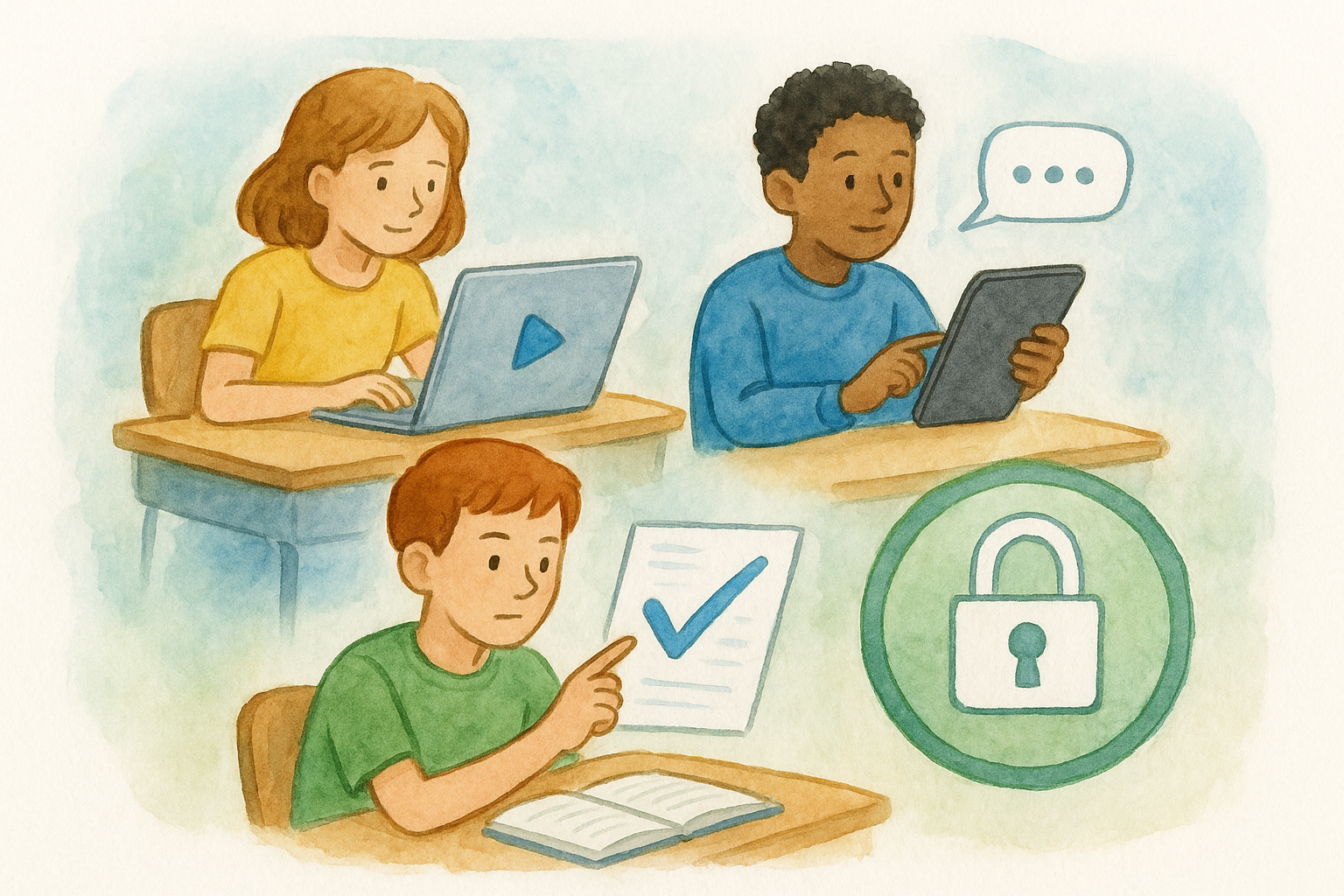
Even in a math class, you can bring up data privacy by examining how apps collect and use personal information. None of this requires a dedicated tech course or a separate curriculum kit. You weave digital responsibility into the content you already teach, and over time, students start applying that judgment on their own.
The 9 elements of digital citizenship
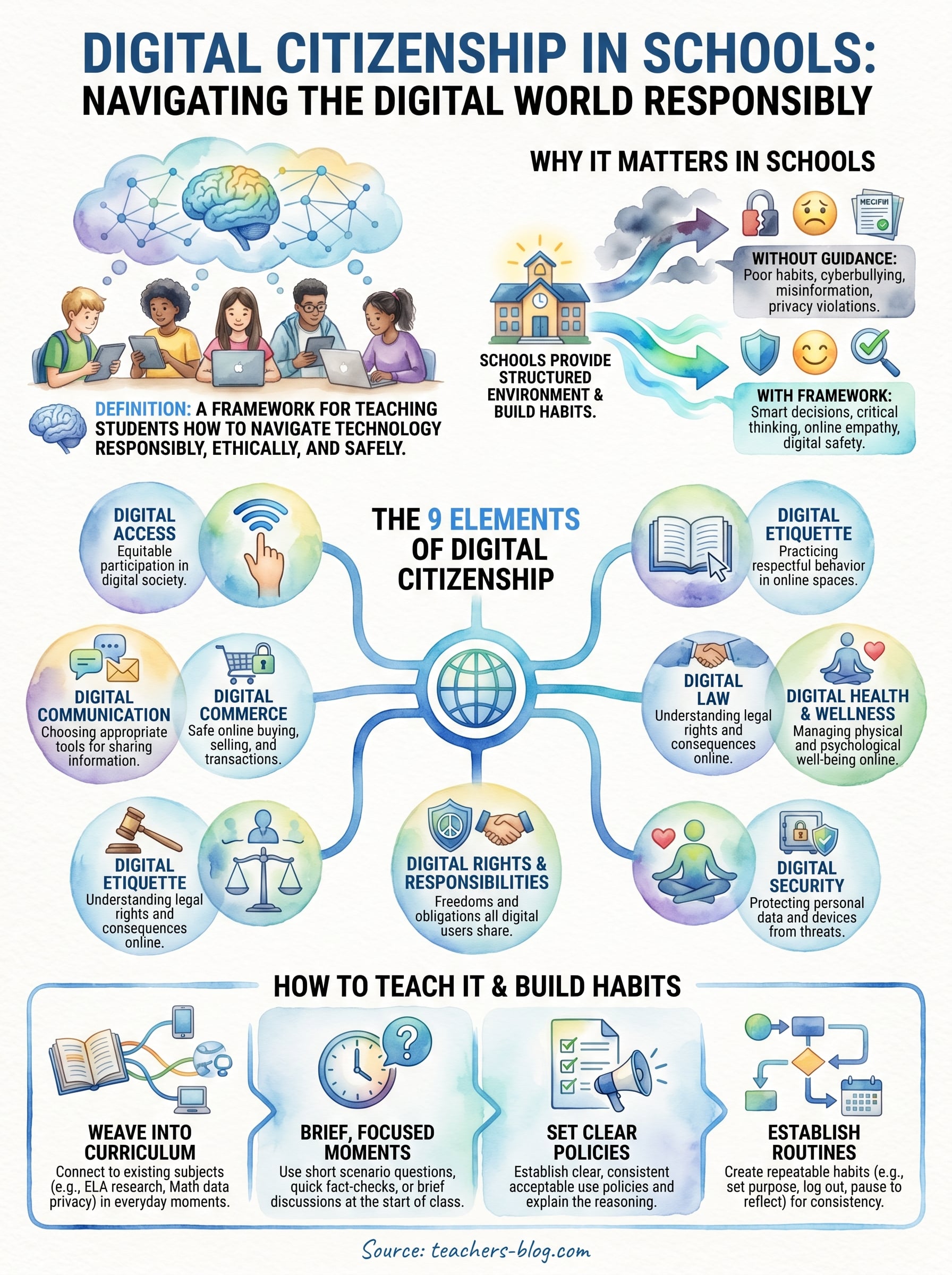
Mike Ribble’s framework organizes digital citizenship in schools into nine distinct elements, each addressing a specific area of responsible technology use. Together, they give you a complete picture of what students need to know before they can navigate the digital world with real confidence.
These nine elements aren’t designed to be taught in one unit; they work best when woven into your curriculum consistently over time.
Breaking down each element
Understanding each element helps you spot where your students already have gaps and where your instruction can have the most impact. Here’s a clear breakdown of all nine:
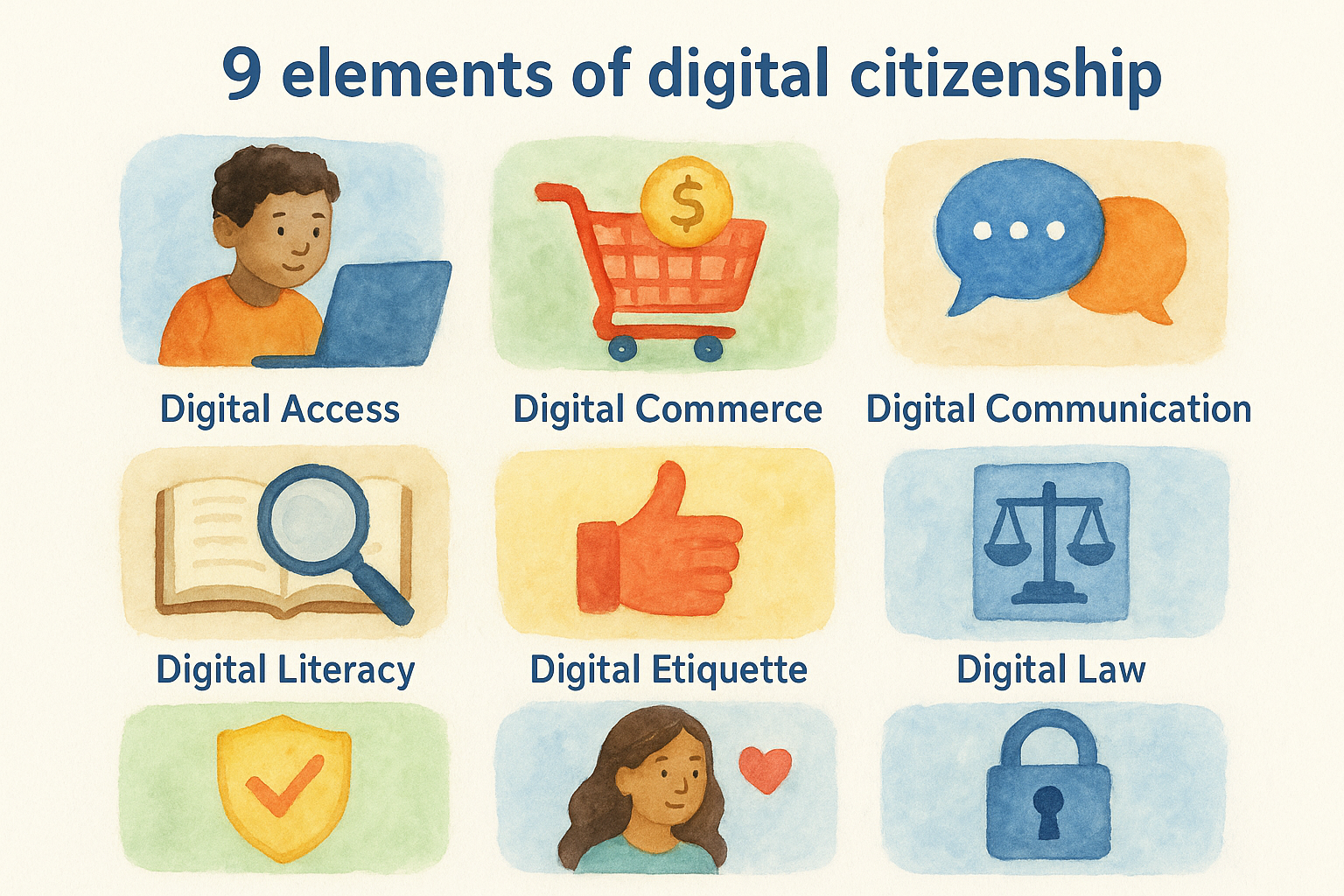
| Element | What it covers |
|---|---|
| Digital Access | Equitable participation in digital society |
| Digital Commerce | Safe online buying, selling, and transactions |
| Digital Communication | Choosing appropriate tools for sharing information |
| Digital Literacy | Evaluating, understanding, and using technology effectively |
| Digital Etiquette | Practicing respectful behavior in online spaces |
| Digital Law | Understanding legal rights and consequences online |
| Digital Rights & Responsibilities | Freedoms and obligations all digital users share |
| Digital Health & Wellness | Managing physical and psychological well-being online |
| Digital Security | Protecting personal data and devices from threats |
No single element stands alone. Students who understand all nine develop the judgment to handle situations you haven’t even anticipated yet, and that adaptability is the real goal of this framework.
How to teach digital citizenship in any subject
You don’t need a separate course or a dedicated unit to make digital citizenship in schools part of your regular instruction. The nine elements fit naturally into the subjects you already teach, and small, consistent connections build stronger habits than any single standalone lesson ever will.
Start with the content you already have
Look at your existing assignments and ask where technology use intersects with your learning goal. A research paper becomes a lesson in digital literacy and digital law. A group project on a shared platform naturally opens a conversation about digital etiquette and communication. You already have more entry points than you realize.
The goal isn’t to overhaul your curriculum; it’s to name what’s already happening and make the digital decision-making visible to students.
Here are a few quick connection points by subject area:
- ELA: Source credibility, citation ethics, and online communication tone
- Social studies: Media bias, data privacy, and civic participation online
- Science/Math: How algorithms use personal data, evaluating statistics from online sources
Build in brief, focused moments
Dedicating a full class period to this topic isn’t always realistic. A two-minute scenario question at the start of class works just as well, especially when you connect it directly back to your content. Ask students how they would handle a specific online situation, then tie that reasoning to the lesson. Those small moments build real, transferable judgment over time.
Policies and routines that keep students safe
Teaching digital citizenship in schools works best when clear policies back up your classroom instruction. Without consistent expectations, students receive mixed messages about what responsible technology use actually looks like. Your school’s acceptable use policy is the starting point, but what you reinforce daily shapes student behavior far more than any document sitting in a handbook. Walk students through your classroom technology expectations on day one, and revisit them whenever you introduce a new tool or assignment.
Policies only work when students understand the reasoning behind them, not just the rules themselves.
Build routines students can follow
Simple, repeatable routines reduce the need for constant correction and reinforce the habits you want students to carry beyond your class. Start each device-based activity with a brief reminder of your expectations, then hold students to them consistently. Over time, those habits become automatic and require far less of your energy to maintain.
Here are a few routines worth building into your classroom:
- Set a clear purpose before students open any device
- Require students to log out of shared accounts at the end of each session
- Review what counts as appropriate sharing before any collaborative task
- Pause after online research to briefly discuss source quality and the choices students made
A simple way to get started
Don’t wait until you have a perfect lesson plan or a full unit built out. The best way to start teaching digital citizenship in schools is to pick one element and connect it to something you’re already doing this week. If your students are doing research, focus on digital literacy. If they’re collaborating online, bring up digital etiquette. One intentional moment per week adds up to real skill-building over a school year, and that consistency matters far more than any single polished lesson ever will.
Building these habits doesn’t have to feel like extra work on top of everything else you’re managing. The Cautiously Optimistic Teacher offers tools and resources designed to help you bring meaningful instruction into your existing classroom without starting from scratch. Your students are already living their digital lives every day, and every lesson you teach is a chance to help them navigate that world with more awareness and better judgment. Start small, stay consistent, and let the nine elements guide you forward.