6 Feedback Strategies For Formative Assessment That Work
You gave feedback on that last assignment. Students glanced at it, shoved the paper in their bag, and moved on. Sound familiar? The problem usually isn’t the feedback itself, it’s the timing. When feedback only shows up after a unit ends, students treat it like a receipt: proof something happened, not a tool to get better. That’s exactly why feedback strategies for formative assessment matter so much. They shift the conversation from "here’s your grade" to "here’s how to improve right now," while learning is still happening.
At The Cautiously Optimistic Teacher, we build resources that help educators work smarter in the classroom, not harder. And few things give you more return on your effort than well-timed, purposeful feedback baked into your daily instruction. It sharpens student thinking, builds a growth mindset, and gives you real data about what’s landing and what’s not.
This article breaks down six concrete feedback strategies you can start using this week. No theory-heavy fluff, just practical techniques that have been tested in real classrooms with real students. Whether you’re teaching eighth graders how to write opinion essays or guiding high schoolers through literature circles, these approaches adapt to your context and make formative assessment actually formative.
1. Use AI to draft targeted feedback fast
AI tools can cut the time you spend writing individual feedback from hours to minutes. When you’re running one of the most effective feedback strategies for formative assessment, speed matters: students need comments while the learning is still active, not two days after the fact. With AI handling the first draft, you redirect your energy toward reviewing and personalizing rather than generating from scratch.
Why it works for formative assessment
Formative feedback has to be fast and specific to actually move student thinking. AI handles the heavy drafting so you can focus on the part only you can do: judging whether the comment fits the student in front of you. That shift means students get actionable comments within the same lesson block rather than waiting until the next class.
How to use it without sounding generic
The key is giving the AI specific details about the student’s work and the exact criterion you’re assessing. Skip vague prompts like "give feedback on this paragraph." Instead, describe what the student attempted, name the skill in focus, and indicate what the work shows. That specificity shapes a response you can actually hand back.
The AI drafts the comment; you decide whether it’s accurate and fair before it reaches a student.
Prompts that produce feedback students can act on
A strong prompt looks like this: "This student is working on thesis clarity in a persuasive essay. Their thesis states [paste the sentence]. Write one sentence naming a strength and one sentence suggesting a specific revision." Short, targeted prompts produce short, targeted feedback students can read and act on in the same period.
Where to plug it in during a lesson cycle
Use AI-drafted feedback during independent work time or right after a quick check-in activity. Pull three to five student samples, generate comments, review them, and return them before the period ends. This keeps feedback inside the lesson rather than buried in your weekend planning.
Guardrails for accuracy, tone, and student privacy
Always read every comment before it reaches a student. AI can misread tone, miss context, or produce something that doesn’t match what you actually observed. Beyond accuracy, never paste identifiable student information into a public AI tool. Use anonymized excerpts to stay aligned with student privacy expectations.
2. Give feedback on one success and one next step
Limiting feedback to one strength and one next step is one of the most efficient feedback strategies for formative assessment. Students process focused comments far better than long paragraph notes, and you spend less time writing things that never get read.
Why this beats "good job" and paragraph-long notes
"Good job" gives students nothing to act on, and paragraph-long notes overwhelm them before they start revising. When you name one specific success, students know what to repeat. One clear next step gives them a single target, which is far easier to act on than five scattered suggestions.
Feedback only works when a student can hold it in their head long enough to use it.
The two-sentence feedback formula
The structure is simple: sentence one names what worked, sentence two names one thing to change. "Your topic sentence states your position clearly. In your next draft, connect your evidence directly to that claim." This formula is repeatable across any task.
Example feedback stems by task type
Start with these stems and fill in the specific detail from the student’s work:
- Writing: "Your hook pulls the reader in. Next, tie your evidence back to your main claim."
- Math: "You set up the equation correctly. Next, recheck step two for a sign error."
How to keep it specific and non-evaluative
Focus your comment on the work, not the student. Phrases like "this paragraph…" or "this step…" keep feedback task-centered and reduce defensiveness during revision.
How to track follow-through in the next attempt
Keep a brief log of the next step you gave each student. When you collect the next piece of work, scan for whether they addressed it. That quick check tells you who needs follow-up and which skills to reteach at the class level.
3. Tie feedback to clear criteria and success looks like
Feedback lands when students know what "good" looks like before they read your comment. Without a shared reference point, your note feels like a judgment call rather than a roadmap. Connecting comments to clear criteria is one of the most reliable feedback strategies for formative assessment because it shifts the conversation from opinion to evidence.
What to clarify before you comment
Before you write a single word of feedback, identify the specific criterion you’re addressing. If students haven’t seen that criterion stated plainly, your feedback will confuse rather than guide. Share the target skill in plain language before work begins, not after you’ve already collected it.
How to anchor feedback to a single criterion
Pick one criterion per feedback cycle and stick to it. "Your evidence selection" or "your paragraph structure" gives students a clear lane to work in. When you address three criteria at once, students don’t know where to start, so they often start nowhere.
One criterion per cycle moves student work forward more than five scattered comments ever will.
Micro-rubrics and checklists that students actually use
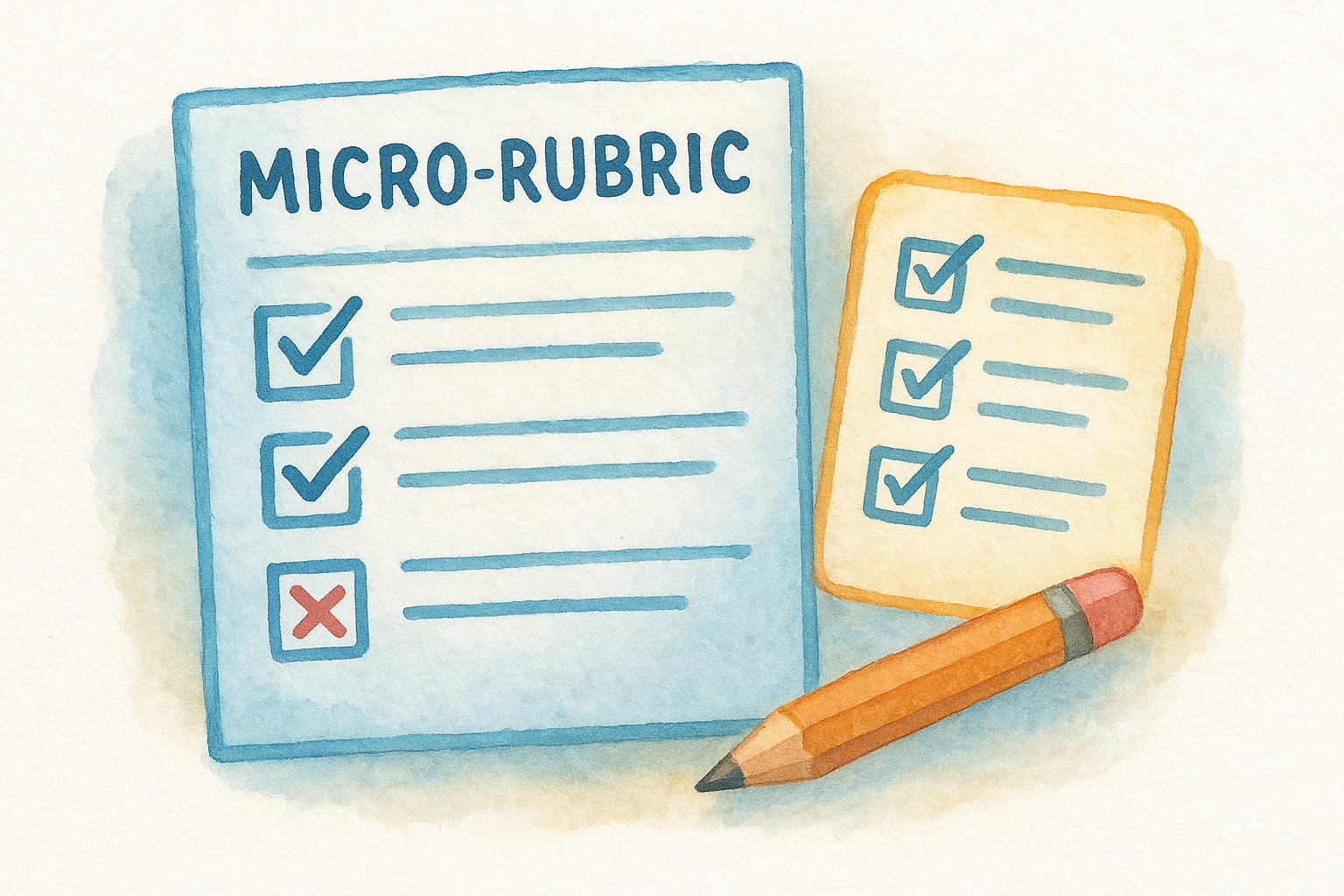
A micro-rubric covers one skill with two or three levels described in plain student language. Keep it to one row and three descriptions. Students can self-check before submitting, which means your feedback confirms or redirects rather than introducing the standard for the first time.
Sample "success looks like" language for common skills
Use "success looks like" stems to make criteria concrete and visible:
- Thesis: "Success looks like a claim that takes a position and previews your reasons."
- Evidence: "Success looks like a quote followed by your explanation of why it matters."
How to avoid overwhelming students with too many targets
Limit each feedback session to one growth target per student. More than one target splits attention and reduces the chance either gets addressed. Rotate which criterion you focus on across drafts so students build skills progressively rather than chasing multiple fixes at once.
4. Use fast whole-class feedback to correct patterns
When 25 to 30 students make the same error on the same task, writing individual notes on each paper wastes time. One well-designed whole-class feedback move is one of the most efficient feedback strategies for formative assessment because it corrects the pattern at the source rather than addressing symptoms one by one.
When whole-class feedback helps more than 30 individual notes
If you scan student work and see the same gap appearing repeatedly, that’s a signal to address the class rather than each student separately. A shared pattern calls for a shared response rather than 30 near-identical comments.
How to collect evidence quickly during work time
Walk the room during independent work and note two or three recurring errors on a sticky note or your phone. Scan for the skill you taught and flag what you see. This quick circulation gives you enough data to respond before the period ends.
How to name trends without calling students out
Frame feedback around the work, not the students. Say "a lot of us" or "something I noticed in many papers" to normalize the gap and reduce defensiveness. This keeps the room psychologically safe while still addressing the problem directly.
Naming a pattern publicly takes one minute and does the work of 30 individual conversations.
Whole-class mini-lessons that respond to what you saw
Pause the class for a three-to-five minute reteach focused on the pattern you identified. Model the correct move using an anonymous student sample, then send students back to revise immediately.
The "common misses and fixes" board routine
Keep a visible section of your whiteboard labeled "Common Misses and Fixes." After you circulate, post one or two patterns and corrections using this format:
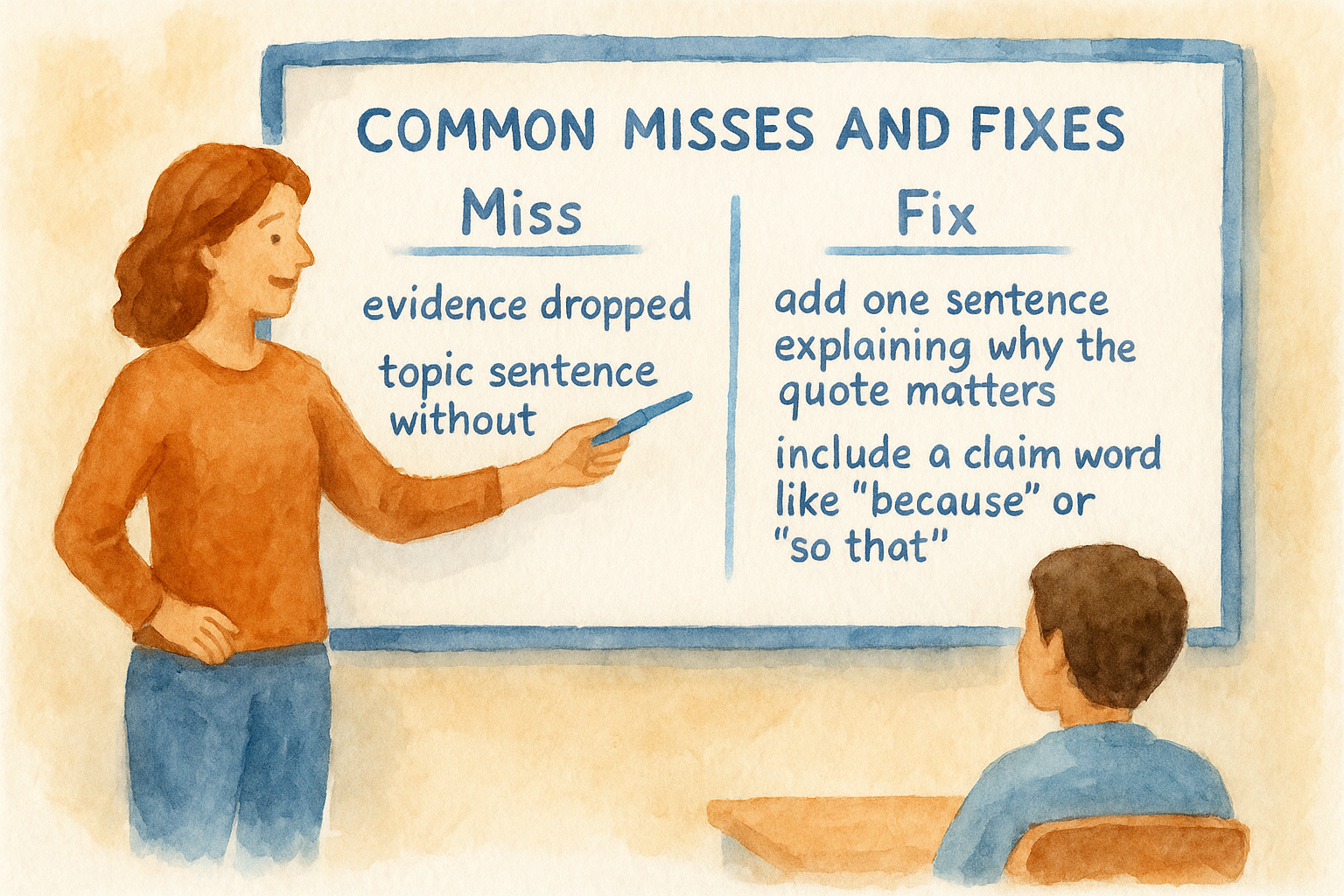
- Miss: evidence dropped without explanation. Fix: add one sentence explaining why the quote matters.
- Miss: topic sentence without a position. Fix: include a claim word like "because" or "so that."
Students reference the board during revision, which reduces interruptions and keeps the work moving.
5. Build peer and self feedback routines
Peer and self feedback are two of the most scalable feedback strategies for formative assessment you have. When students learn to assess their own work and give specific comments to peers, you multiply the feedback happening in the room without multiplying your workload.
How to teach students to give useful peer feedback
Students give vague feedback when they haven’t been taught otherwise. Model exactly what useful feedback sounds like by thinking aloud with a sample piece of work before students try it themselves. Show them the difference between "good" and "your topic sentence states a clear position."
Modeling peer feedback with a real example takes five minutes and saves you weeks of redirecting vague comments.
Peer feedback protocols that stay kind and specific
Give students a structured protocol like "two stars and a wish" or a sentence stem sheet so feedback stays focused. Stems such as "One thing that worked is…" and "One thing to try next is…" keep comments task-centered and kind.
Self-assessment prompts that lead to better revisions
Replace open-ended reflection with targeted prompts tied to the lesson’s success criteria. Ask students to highlight where they met the target and circle one sentence they want to improve. That active comparison against criteria drives real revision.
How to structure time so feedback turns into action
Build five to eight minutes of structured revision time immediately after peer or self feedback. Without that window, feedback sits unread and the routine loses its purpose.
Accessibility and classroom culture moves that make it safe
Frame peer feedback as collaborative problem-solving, not evaluation. Pair students thoughtfully and remind the class that every comment targets the work, not the writer.
What to do next
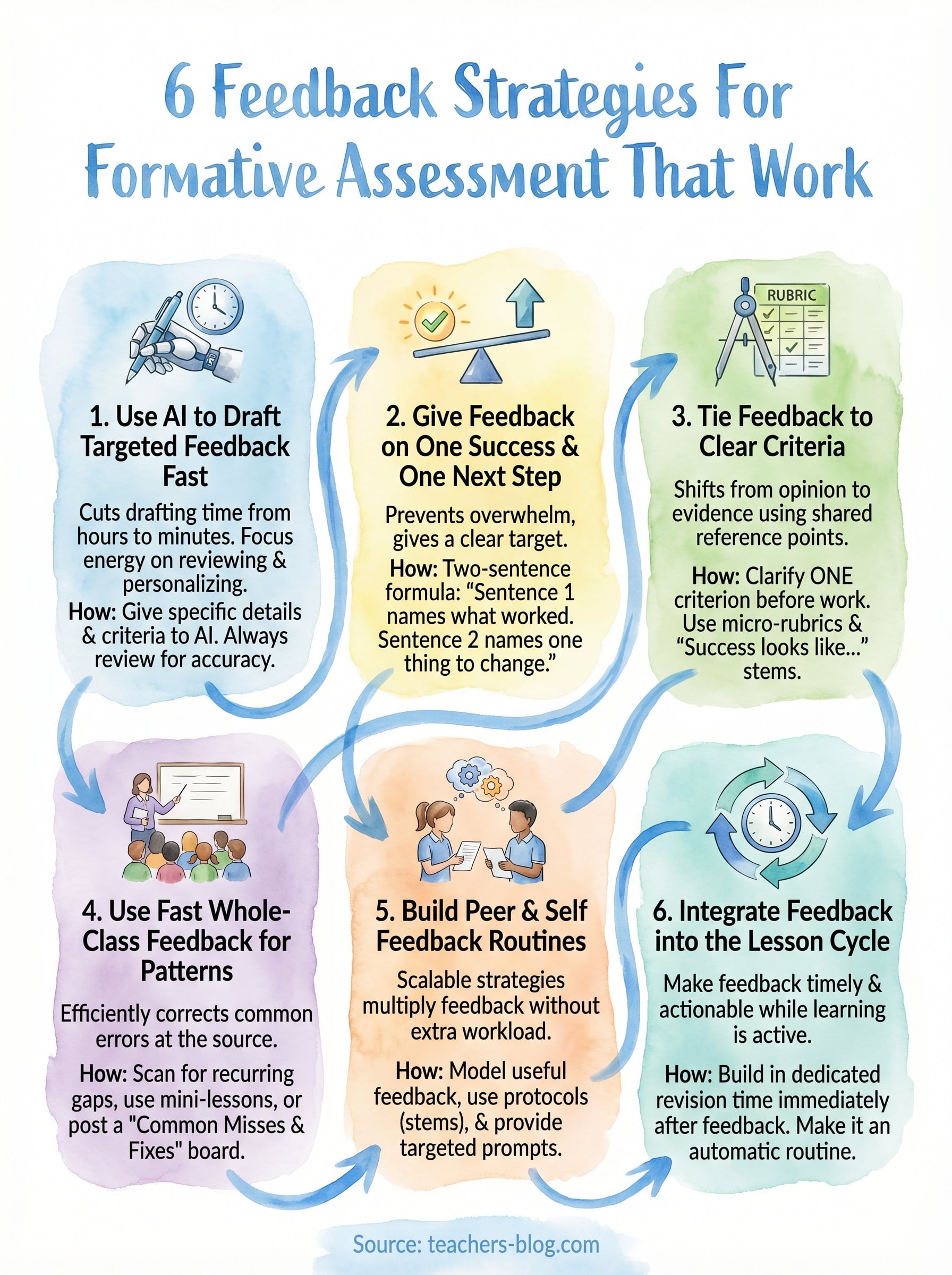
These six feedback strategies for formative assessment give you a full toolkit to make feedback timely, targeted, and actually useful to students. You don’t need to run all six at once. Pick one strategy that fits your current unit and test it this week. Notice what changes in how students respond and revise.
Once you’ve tried one approach, layer in a second. Start with whole-class feedback if you’re short on time, or build a peer feedback protocol if your students are ready to take more ownership. The goal is a feedback routine that becomes automatic for both you and your students, so learning stays active throughout the unit rather than wrapping up when grades come out.
For more practical classroom strategies and tools built specifically for educators, visit The Cautiously Optimistic Teacher and explore resources designed to help you work smarter every day.